
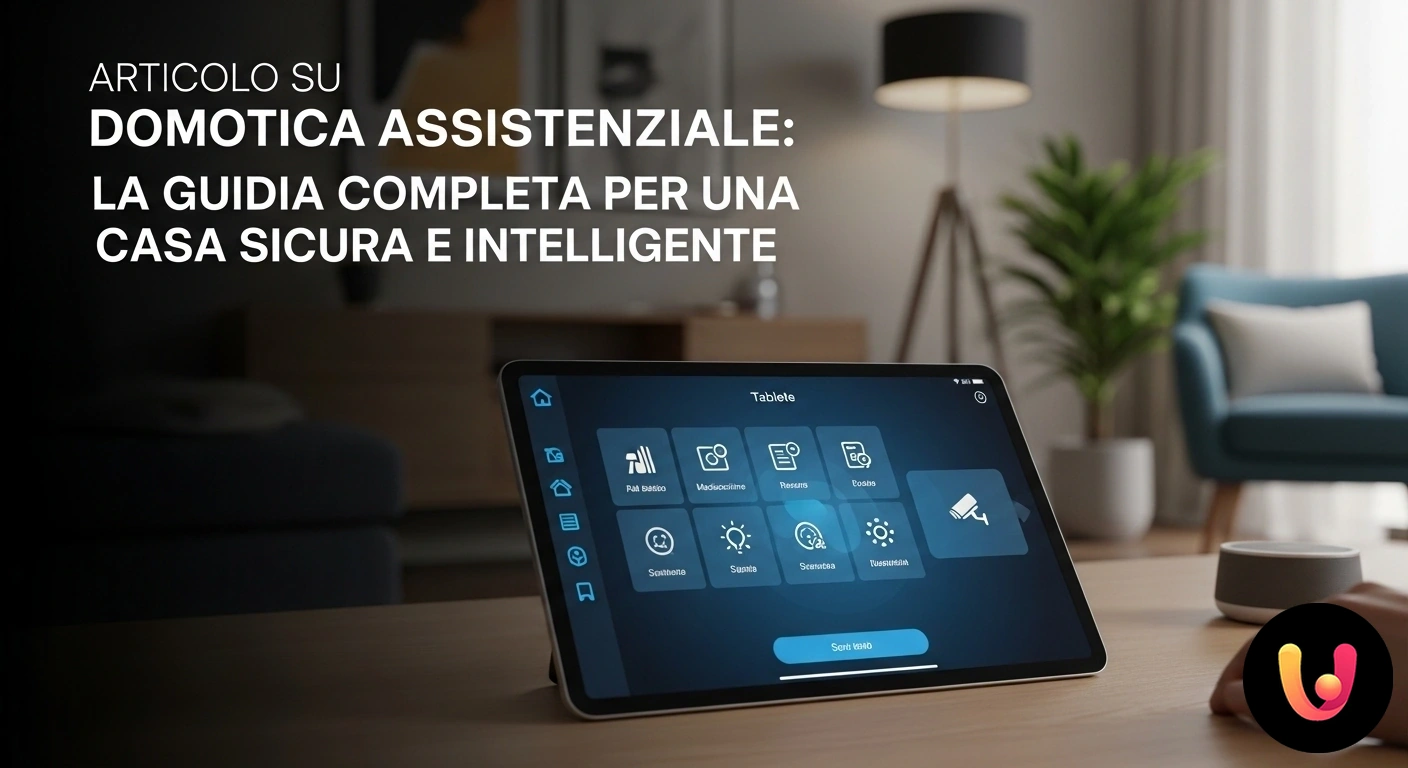
Technology is reshaping the way we live, and one of the most promising fields is assistive home automation. This is a set of smart solutions designed to make homes safer, more comfortable, and more accessible, especially for seniors or individuals with reduced mobility. In Italy, where the population is progressively aging—with recent data showing a ratio of nearly six people over 65 for every child—home automation is no longer a luxury, but a necessity. This technology helps reconcile innovation with the deep-seated Mediterranean cultural value of caring for loved ones, allowing them to live longer and more safely in their own homes.
The goal of assistive home automation is simple: to improve the quality of life. It does this through integrated systems that automate and control home functions, from security and health management to daily comfort. These tools support a person’s independence, reducing the caregiving burden on family members and caregivers. Imagine a home that “takes care” of its residents: lights that turn on automatically to prevent nighttime falls, sensors that alert emergency services in case of a medical issue, and devices that provide medication reminders. This isn’t science fiction, but a tangible and increasingly accessible reality.
Why Assistive Home Automation is the Future of Care in Italy
Italy is facing an unprecedented demographic transition. ISTAT data show a steady aging of the population, with the average age reaching 46.6 years. This scenario calls for a reevaluation of care models to find new, sustainable, and effective solutions. Assistive home automation meets this need by offering tangible support for managing senior years. It allows seniors to maintain their independence longer, a desire deeply rooted in our culture, where the home is the center of affection and memories. Technology thus becomes an ally in preserving independence without uprooting people from their familiar surroundings.
In this context, the smart home market in Italy is experiencing strong growth, with a value exceeding 900 million euros and an 11% increase in 2024. Although per-capita spending is still below the European average, consumer interest is on the rise, driven by the demand for greater security, comfort, and energy savings. Assistive home automation fits into this trend, transforming the home into a proactive ecosystem. It’s not just about installing tech gadgets, but about creating an environment that actively supports the individual, promoting aging gracefully and with dignity within their own homes.
Safety First: Preventing Household Risks
Safety is the top priority when it comes to seniors living alone. Falls, household accidents, and medical emergencies are among the most common risks. Home automation offers targeted solutions to create a protected environment 24/7. These systems do not replace human presence but act as a technological “guardian angel,” always vigilant and ready to act. The integration of smart sensors and alarms transforms the home into a secure fortress, providing peace of mind to both the resident and their family members, who can monitor the situation remotely.
Fall and Motion Sensors
Falls are one of the greatest dangers for the senior population. Modern fall detection sensors, wearable as bracelets or watches, can detect a hard impact and, if the person does not get up within a set time, automatically send an alert to preset numbers. Other systems, based on ambient sensors and artificial intelligence, monitor movements within the home to detect anomalies, such as prolonged immobility in a room. To explore the available options, it’s helpful to consult a guide to choosing safety options, which explains the different technologies for preventing these accidents.
Access Control and Video Surveillance
Ensuring that only authorized individuals can enter the home is crucial. Smart locks allow you to manage access via a smartphone, eliminating the risk of losing keys. You can create temporary access for caregivers or medical staff, receiving a notification each time the door is opened. Video surveillance, although it requires careful consideration of privacy, can offer an additional layer of security. Connected video doorbells let you see who is at the door and answer without getting up, while indoor cameras can be activated only in case of an alarm, fully respecting the resident’s privacy.
Gas, Smoke, and Flood Detectors
Household accidents not related to falls are another source of concern. Gas leaks, early signs of fire, or flooding can have serious consequences. Smart detectors are lifesaving devices that constantly monitor the environment. In case of danger, they trigger an audible alarm and send an immediate notification to the smartphones of family members or a monitoring center. Some advanced systems can also perform automatic actions, like shutting off the gas or water main valve, to limit damage and secure the home even before help arrives.
Health and Wellness at Your Fingertips
Beyond safety, assistive home automation plays a crucial role in health monitoring. Living at home shouldn’t mean being isolated from a healthcare perspective. New technologies allow for constant and discreet monitoring of vital signs, making it easier to prevent and manage chronic conditions. This approach turns the home into a primary health outpost, where data is collected non-invasively and shared, if necessary, with the primary care physician or family members. The goal is to intervene promptly at the first sign of a problem, improving the effectiveness of care and reducing hospitalizations.
Telemedicine and Vital Signs Monitoring
The home becomes a health monitoring hub thanks to connected devices like blood pressure monitors, smart scales, and pulse oximeters. These devices record data and send it to an app, creating an easily reviewable history. The integration of home automation and telemedicine allows doctors to monitor patients remotely, optimizing treatments and intervening quickly in case of abnormal readings. This is particularly useful for those with chronic illnesses who need regular monitoring, ensuring continuous care without the need for frequent travel.
Smart Medication Dispensers
Forgetting to take a pill or taking the wrong dose is a common but potentially risky mistake. Smart medication dispensers are designed to solve this problem. These devices can be programmed to release the correct pills at the right time, accompanied by a light and sound alert. If the medication is not taken, the system can send a notification to a family member or caregiver. This solution ensures medication adherence, a key factor in the effectiveness of treatment, and relieves the person of the responsibility of remembering complex schedules and dosages.
Comfort and Simplicity for Everyday Life
A home environment should not only be safe but also comfortable and easy to manage. Many everyday tasks, which are trivial for some, can become complex with age. Home automation steps in to simplify these routines by automating repetitive tasks and making home control more intuitive. The goal is to reduce the physical and cognitive effort required to manage the home, allowing the person to save their energy for the activities they love. A smart home is a home that adapts to the needs of its resident, not the other way around.
Smart Management of Lights, Climate, and Blinds
Actions like getting up to turn off a light or adjust the thermostat can be tiring. With home automation, control of lighting, blinds, and climate becomes centralized and automatic. You can create custom “scenes”: for example, a “Goodnight” scene can turn off all the lights, lower the blinds, and adjust the thermostat with a single command. Automating lights, perhaps with motion sensors, is crucial for preventing nighttime falls, as explained in our guide on smart lighting for seniors. This not only increases comfort but also contributes to energy savings.
Voice Assistants: A Bridge Between Technology and Tradition
Voice assistants like Alexa and Google Home are the simplest and most natural way to interact with technology. For a senior who is unfamiliar with complex smartphones and apps, being able to control the home with their voice is a true revolution. Simple phrases like “Alexa, turn on the living room light” or “Hey Google, what’s the weather?” break down any technological barriers. These devices become a go-to hub for getting information, listening to music, making calls, and managing all connected smart devices. A guide on how to use Alexa and Google Home for a senior-friendly home can help you fully understand their potential.
Tradition and Innovation: A Mediterranean Balance
In Mediterranean culture, and particularly in Italy, family and caring for elders within the family unit are deeply rooted values. The introduction of assistive home automation should not be seen as an attempt to replace this human connection, but as a way to strengthen it. Technology becomes a tool that supports the family, allowing children and grandchildren to care for their loved ones remotely with greater peace of mind. Innovation serves tradition, ensuring that seniors can continue to live in the warmth of their home, surrounded by their loved ones, but with a level of safety and independence unimaginable just a few years ago.
Incentives and Tax Breaks in Italy
Making your home smart and safe is an investment in the future, and the Italian government offers support through various tax incentives. The Home Automation Bonus, part of the Ecobonus, provides tax deductions for the installation of *building automation* systems that improve energy efficiency. Although the rates may vary, these incentives make adopting the technology more accessible. It’s important to stay informed about the specific requirements and deadlines to take advantage of these opportunities. For a complete overview, it’s advisable to consult an updated guide on the home automation bonus for seniors and people with disabilities.
In Brief (TL;DR)
Assistive home automation transforms the home into a safe and smart environment, improving the independence and quality of life for seniors.
We will analyze essential devices, from fall safety to health monitoring, with a focus on usability to enhance independence and quality of life.
Discover key solutions to make every room in the house safer and more accessible, ensuring peace of mind for seniors and their families.
Conclusion

Assistive home automation is one of the most effective and humane responses to the challenges posed by an aging population. It’s not about filling the home with technology for technology’s sake, but about using innovation to achieve a noble goal: ensuring independence, safety, and dignity for seniors. From fall prevention and health monitoring to simplifying daily routines, every device and automation helps create a better living environment. In a country like Italy, where the bond with home and family is a cultural pillar, assistive home automation offers the chance to merge tradition and progress, allowing our loved ones to live out their golden years in the place they love most, in complete safety and comfort.
Frequently Asked Questions
Assistive home automation offers numerous benefits that improve a senior’s quality of life. First, it significantly enhances home *safety* with sensors for floods, gas leaks, and smoke, as well as video surveillance systems. Second, it promotes greater *independence* by allowing them to manage lights, blinds, heating, and other devices with voice commands or simple apps, reducing the need for potentially risky movements. Finally, it provides crucial emergency support, for example, through fall sensors or SOS buttons that automatically alert family or emergency services, providing peace of mind for both the senior and their loved ones.
No, modern assistive home automation systems are designed with a special focus on usability. The user interface is often very *intuitive* and does not require advanced tech skills. Many functions can be controlled via *voice commands* (using assistants like Alexa or Google Assistant), simplified physical buttons, or apps with large, clear icons on a tablet or smartphone. The goal is precisely to simplify daily life, not complicate it. The technology adapts to the person’s needs, allowing them to perform complex actions, like adjusting the lights or answering the video doorbell, with a simple gesture or word.
To start, it’s advisable to focus on a few key devices. An *emergency call system*, such as a bracelet or a medical alert pendant, is essential for reporting falls or medical issues. Next are *environmental sensors*, which can detect gas leaks, smoke, and floods to prevent household accidents. *Lights with motion sensors* are very useful for illuminating pathways at night, reducing the risk of falls. Finally, a *smart video doorbell* and smart locks allow you to see who is at the door and open it remotely, increasing security against intruders.
The cost is highly variable and depends on the number and type of devices installed. You can start with a few hundred euros for a basic kit with a voice assistant and some smart plugs, up to several thousand euros for a complete, integrated system. In Italy, it’s possible to take advantage of tax incentives. The *Home Automation Bonus*, part of the Ecobonus, allows for a 50% IRPEF (personal income tax) deduction for a primary residence and 36% for second homes in 2025 on expenses for the purchase and installation of ‘building automation’ systems that improve energy efficiency. It is always advisable to check the current regulations and specific requirements to access these bonuses.
This is a valid concern. The answer depends on the type of system. Many essential safety devices, like smoke detectors or alarm systems, are equipped with *backup batteries* to function even without power. As for the internet connection, some systems continue to operate on the local network (home Wi-Fi) for basic automations, like turning on lights with sensors. However, remote control functions and smartphone notifications will stop working. For this reason, more critical systems sometimes include backup connectivity via a data SIM card.





Did you find this article helpful? Is there another topic you'd like to see me cover?
Write it in the comments below! I take inspiration directly from your suggestions.